🎤 From Rapper to Prime Ministerial Hopeful — Nepal’s Balendra “Balen” Shah Shakes Up Politics
Nepal’s upcoming elections in 2026 could mark a dramatic shift in its political landscape as rapper-turned-mayor Balendra “Balen” Shah enters the prime ministerial race, backed by youth movements and a reform-driven party alliance.
WORLD NEWS
12/30/20253 min read
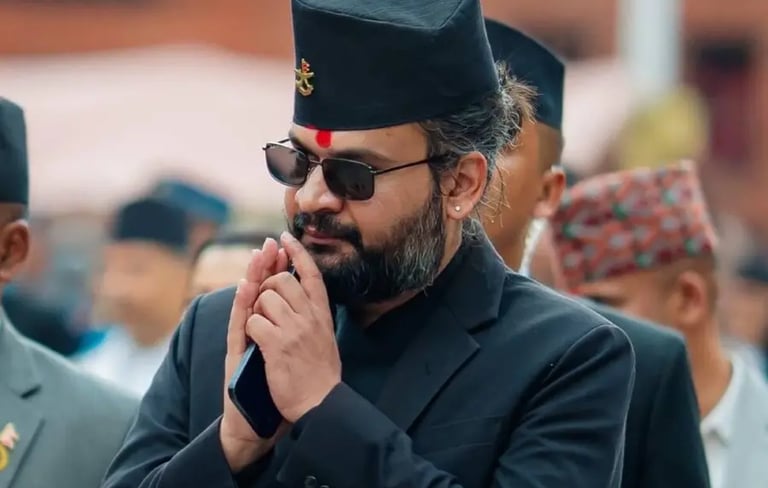
Nepal is gearing up for one of its most unpredictable elections in decades. In a development that has captured global attention, Balendra “Balen” Shah — a former rapper, engineer, and current mayor of Kathmandu — has officially been named as a prime ministerial candidate for Nepal’s March 5, 2026 parliamentary elections. This move underscores a major shift in a political system long dominated by established parties. Khaleej Times
What makes this story especially compelling isn’t just Shah’s celebrity background or social media presence — it’s the symbolic transition from cultural influencer to potential national leader in a country grappling with fresh calls for reform.
✨ Who Is Balendra “Balen” Shah?
Balendra Shah — known popularly as Balen — is a Nepalese politician, former rapper, and structural engineer who has emerged as a compelling new political force. Born in Kathmandu in 1990, he rose to prominence in the Nepali hip-hop scene before entering public life. Wikipedia
In 2022, Shah made history by winning the mayoral election in Kathmandu as an independent candidate, becoming the first non-party politician to do so in Nepal’s capital. His campaign focused on corruption reduction, waste management, traffic control, and community revitalization — priorities that resonated widely with urban voters and younger demographics. Wikipedia
🗳️ A Groundbreaking Political Alliance
Shah’s rise to national prominence took a dramatic turn when he joined forces with the Rastriya Swatantra Party (RSP), a reformist political group led by former TV host and politician Rabi Lamichhane. Under the alliance agreement, if the RSP wins the upcoming elections, Shah will assume the position of prime minister, while Lamichhane remains the party chief. Reuters
This alliance represents a strategic effort to challenge Nepal’s longstanding political duopoly — mainly the Communist Party of Nepal (Unified Marxist–Leninist) and Nepali Congress — which have shared power for decades. Critics argue these traditional parties have stagnated and failed to address persistent issues like corruption, economic development, and youth unemployment. Khaleej Times
🌀 The Youth Factor: Gen Z and Political Change
One of the most striking elements of this election cycle is the role of youth mobilization. Nepal witnessed massive Gen Z-led protests against corruption in September 2025, which ultimately contributed to the resignation of then–Prime Minister K.P. Sharma Oli. These demonstrations, which involved students and young professionals, resulted in 77 deaths and added around 1 million new young voters to the electoral rolls. Khaleej Times
Though Balendra Shah wasn’t an official protest leader, his social media engagement, cultural influence, and political visibility made him a symbolic figure for many younger Nepalis demanding change. Analysts see the RSP’s decision to elevate Shah as a prime ministerial candidate as a calculated move to channel this youth energy into electoral momentum. Khaleej Times
Why This Matters for Nepal’s Future
Nepal’s political landscape is now at a crossroads. With roughly 19 million eligible voters in a country of about 30 million people, the youth vote could prove decisive. The inclusion of nearly 1 million new young voters — many energized by anti-corruption sentiment — signals a generational shift in political engagement and priorities. Khaleej Times
For decades, Nepalese politics has been dominated by established parties with entrenched leadership structures. The rise of celebrity figures like Shah and his ally Lamichhane — both outsiders to traditional political hierarchies — represents a broader trend across South Asia where charismatic, non-traditional leaders are gaining ground. The Guardian
If Balen becomes prime minister, it could usher in a new era of youth-centered governance, pushing policy discussions on corruption, transparency, and economic opportunity to the forefront. Yet challenges remain: critics question whether celebrity status translates into effective governance, and the alliance leadership faces scrutiny over legal and political vulnerabilities. Reuters
📌 What’s Next: The Road to the Ballot Box
As Nepal readies for its March 2026 parliamentary elections, the world will be watching how this unusual candidacy unfolds. The campaign season promises heightened political debates, greater engagement from young voters, and potentially a more diverse policy discourse.
Whether Balendra “Balen” Shah can translate his grassroots appeal into a successful national mandate remains to be seen — but one thing is clear: Nepal’s political story in 2026 will be unlike any it has told before. Khaleej Times